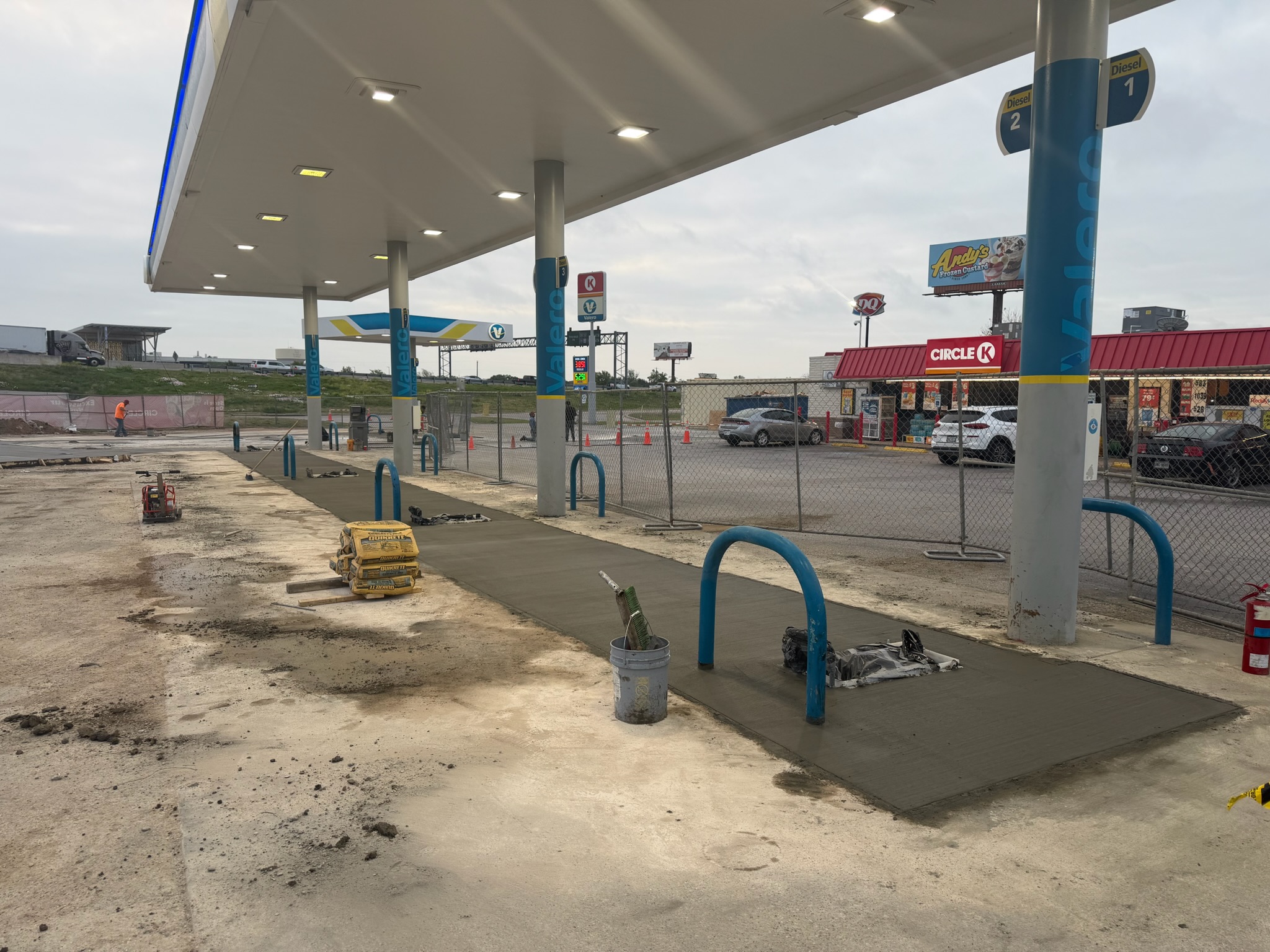
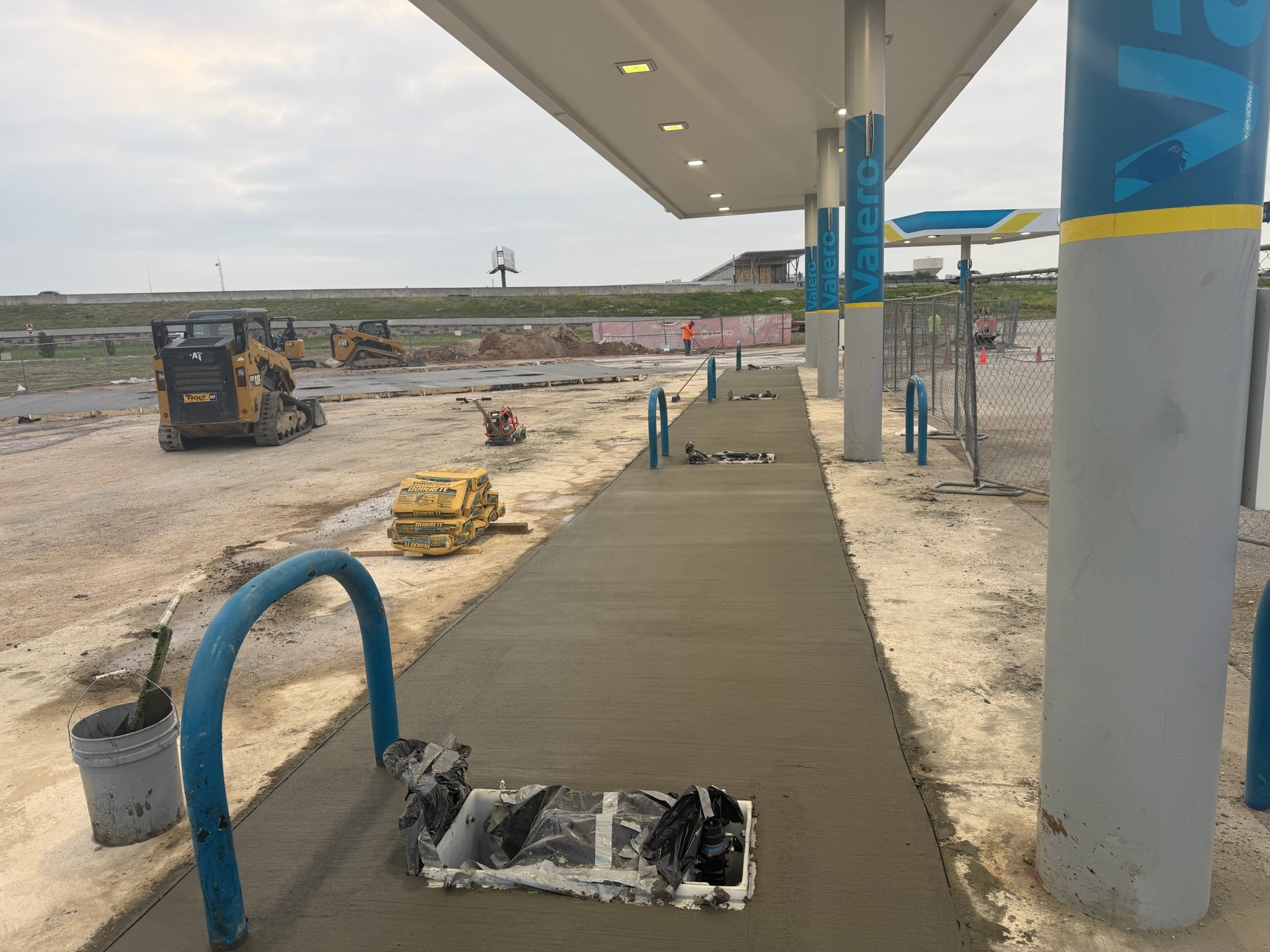
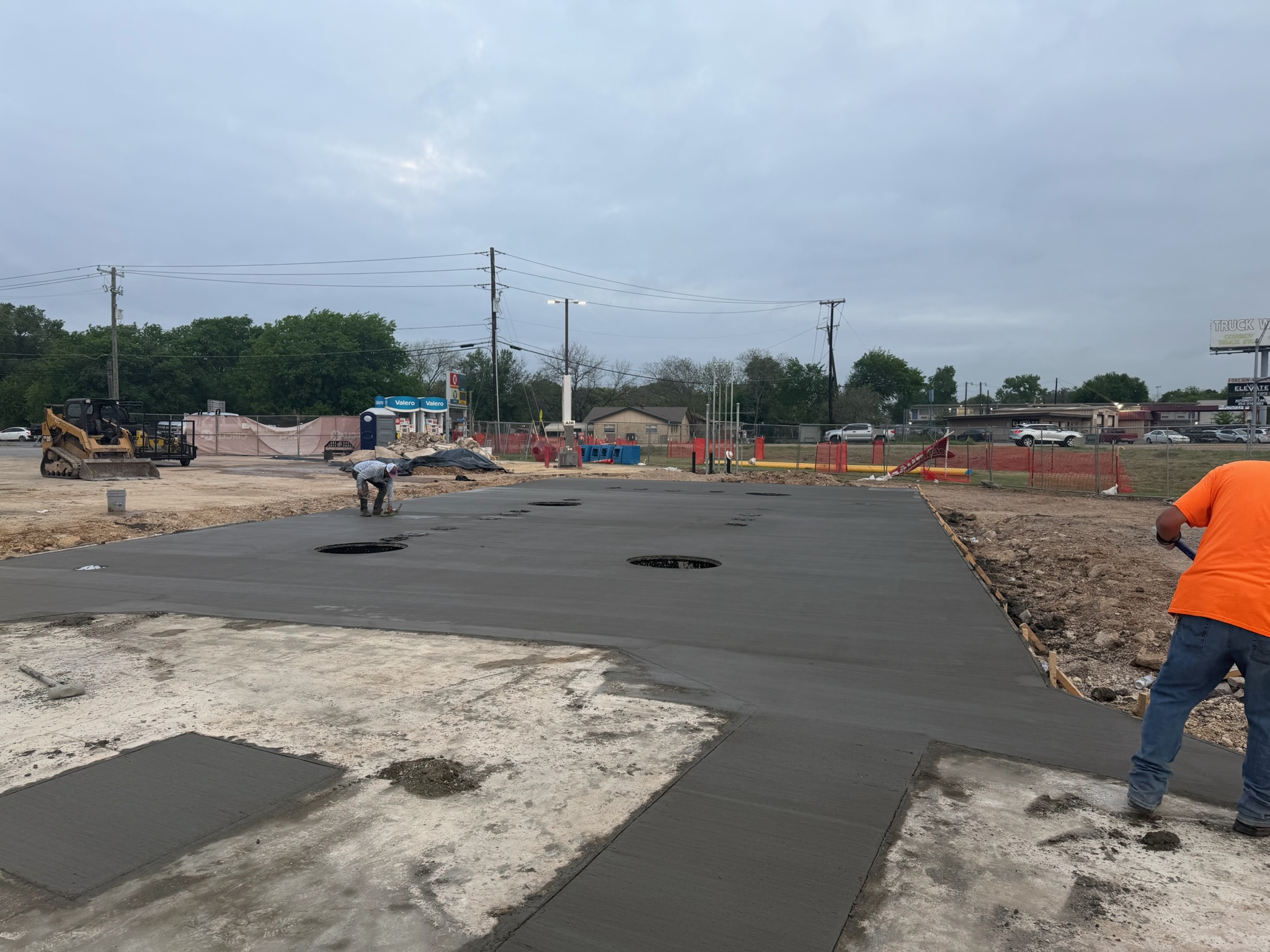
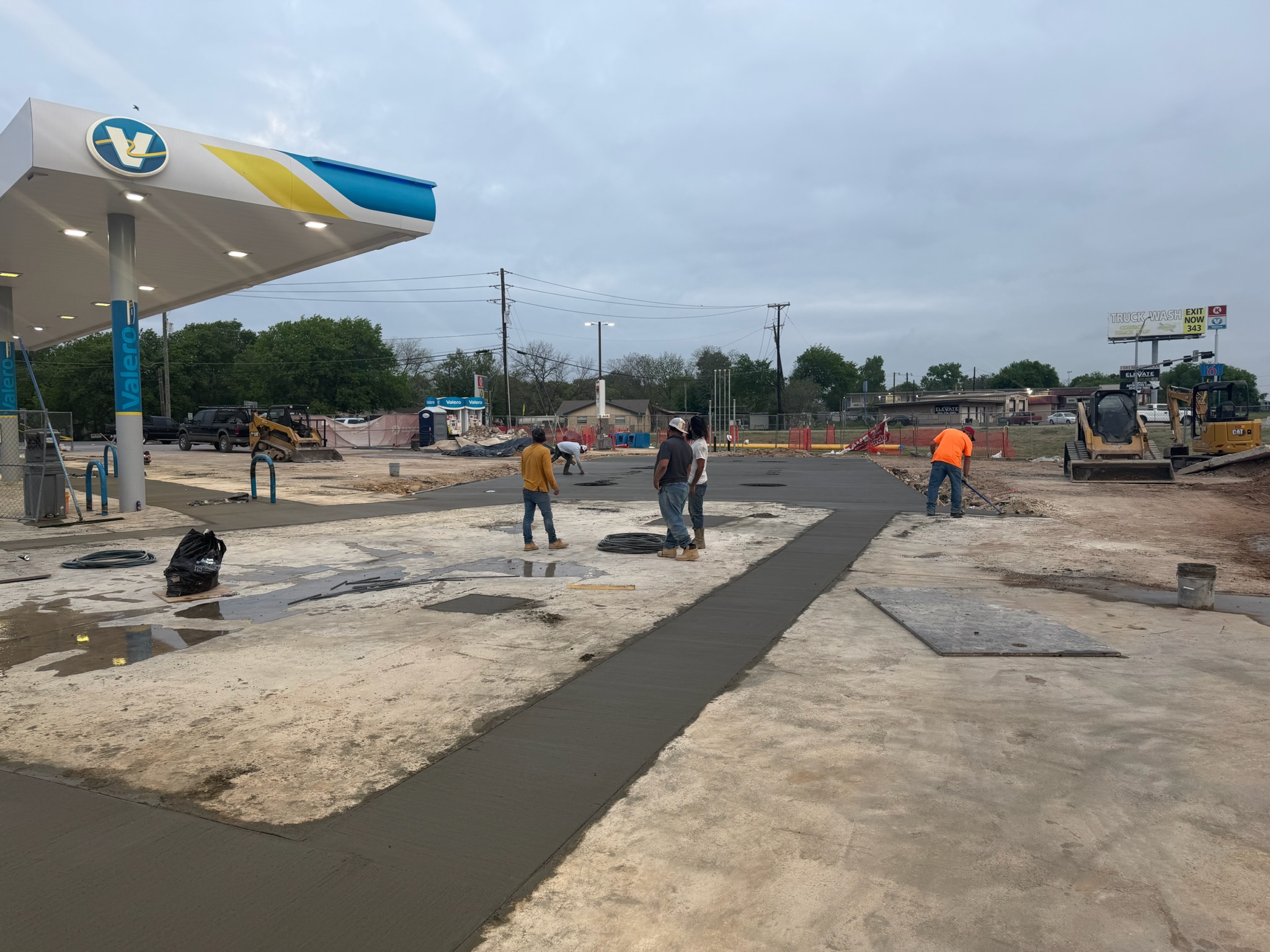
This batch is from the Circle K work in Lacy Lakeview, just north of Waco. The crew had fresh concrete flatwork down under the fuel canopy and around the pump lanes. This is the kind of commercial concrete work where the finish has to be clean, but the bigger deal is keeping the grades right so water moves the way it should and the traffic areas hold up.
A placement-phase record, not the final handoff
There was still cleanup and detail work going on around the edges when these photos were taken. Forms, tools, and construction fencing were still on site, so this was not the finished handoff. It was a real jobsite update: new concrete in place, sections curing, and the crew working through the next pass.
For commercial concrete in the Waco area, especially fuel stations, parking areas, sidewalks, and service lanes, the small details matter. Slope, control joints, tie-ins, and edge work all affect how the slab performs after the site opens back up to steady traffic.
The photo set does not document thickness, reinforcement, concrete strength, testing, cure duration, traffic rating, or reopening approval. Those facts should come from the site plans and project record, not from the appearance of fresh flatwork.
Keep utilities, customers, and traffic in the sequence
Fuel-canopy work needs a written plan for truck and crew access, pump and utility protection, public separation, staging, paving tie-ins, drainage, barriers, and the lanes or pumps that remain available. The proposal should identify who owns each item and who authorizes the area to reopen after cure and inspection requirements are met.
The related Circle K apron placement note focuses on the active finishing phase. For broader scope questions, review commercial concrete work in Waco and the project gallery.