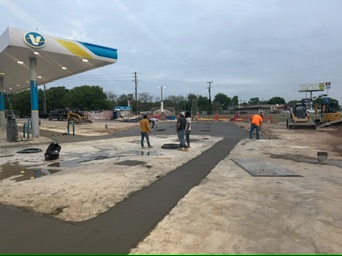
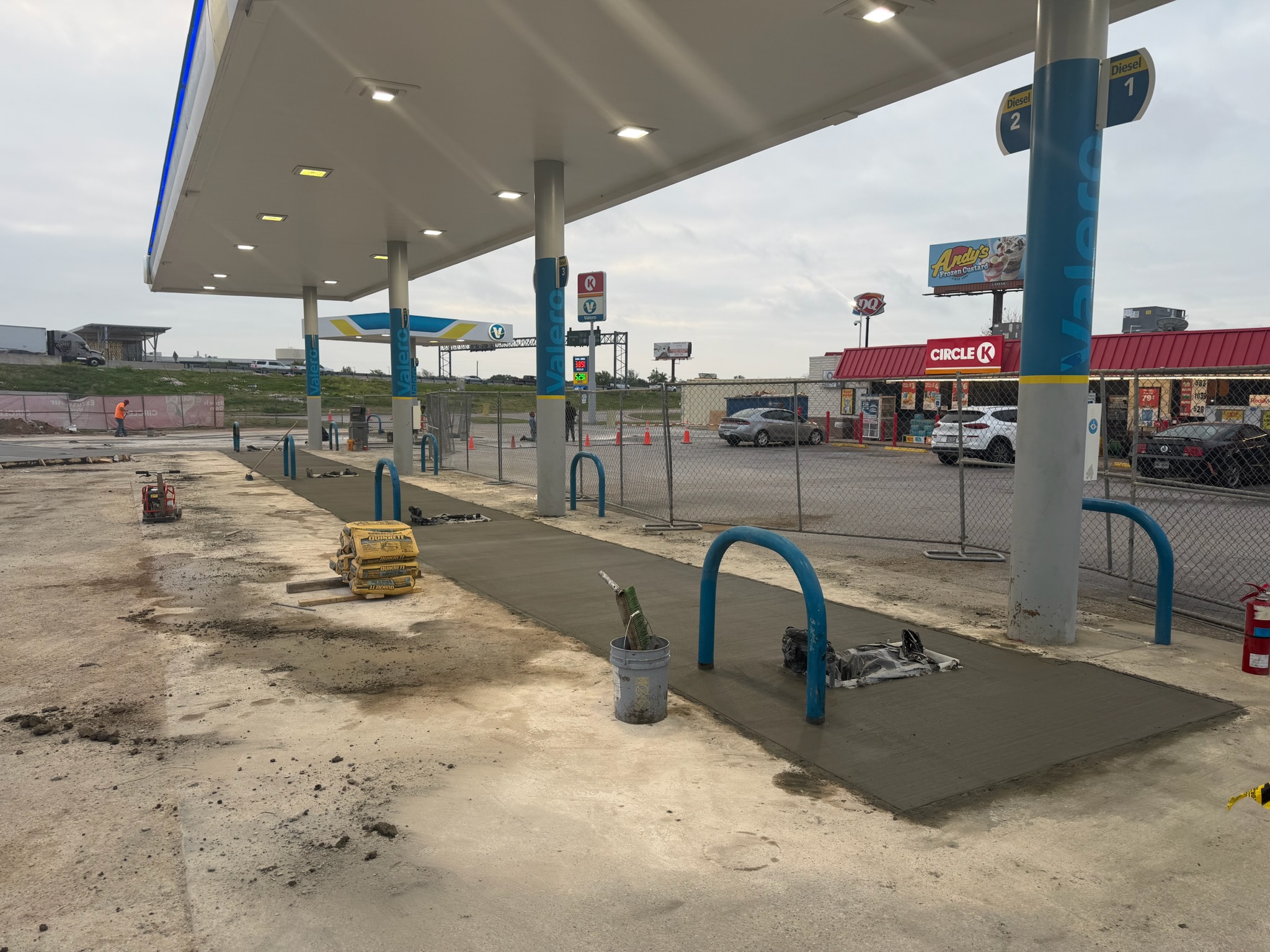
This Circle K page now has one job: document the apron and drive-lane placement phase. The original SLA album shows a fresh strip of concrete being floated while compactors and paving equipment remain nearby. That makes the page useful for understanding how concrete work fits into a larger fuel-site paving sequence.
What the placement photos establish
The images show active concrete placement in a traffic area at the Lacy Lakeview Circle K, crew members working the fresh surface, defined edges, and adjacent equipment for other paving work. The source note calls the work an apron and drive area rather than a sidewalk or decorative slab.
The photographs do not establish section thickness, reinforcement, concrete strength, exact slopes, fuel-system clearances, inspection approvals, or traffic-opening time. Those details belong in the civil documents, site controls, delivery tickets, and closeout record.
Coordinate concrete with an operating traffic plan
At a fuel or convenience site, the concrete crew is only one part of the sequence. The project team needs to define truck access, pump and utility protection, public separation, staging, paving tie-ins, drainage paths, and which lanes or pumps remain available. A clean surface is not enough if the work zone or transitions are unresolved.
During placement, the crew must preserve the planned elevation and edge while keeping other equipment out of the finishing path. After placement, barriers and reopening controls should follow the project requirements so vehicles do not reach the slab or its edges too soon.
Use the master article for the whole site story
The Circle K concrete flatwork case study shows the broader canopy and pump-lane context. This phase note stays focused on the fresh apron and drive area so the two URLs answer different questions instead of competing with duplicate summaries.
When comparing a similar commercial bid, ask which party owns base preparation, concrete, asphalt or paving tie-ins, utility coordination, traffic control, testing, cure protection, cleanup, and final reopening. A line-item scope makes the handoffs visible before construction.