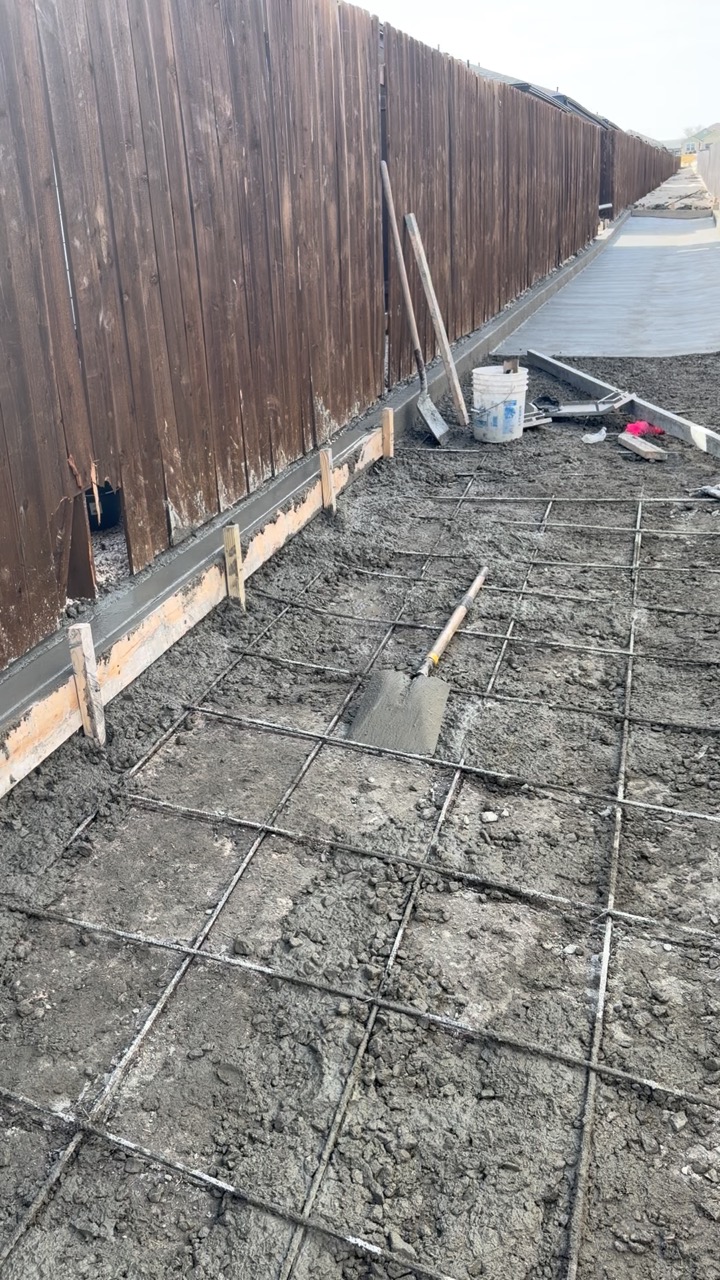
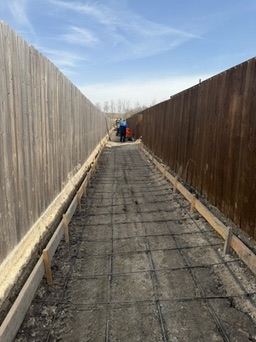
SLA’s source record identifies this Temple installation as 400 feet of drainage channel. The photographs show a long narrow work area beside a fence, channel forms and concrete, and reinforcement for adjacent slab work. That combination gives the page a real purpose: documenting how a drainage run is controlled through a constrained corridor.
Length is only one part of drainage performance
The 400-foot figure comes from the original project note. For a channel to move water, the project also needs a defined inlet, outlet, cross-section, continuous fall, transitions, capacity, adjacent grade, and maintenance access. None of those values can be verified from the published photos alone.
The image record does show forms holding the channel line, reinforcement at nearby concrete, tight access beside fencing, and crew work distributed along the run. Those visible constraints affect sequence, material movement, and the points available for checking elevation.
Use hold points before each section is covered
A practical inspection sequence can verify excavation and subgrade, form line and elevation, steel or embedded items where specified, connections, concrete placement, finish, joints, cure, and the final unobstructed path. The responsible designer or inspector should define the acceptance criteria.
Long runs magnify small elevation errors, so the crew and project team need reliable control rather than judging flow by appearance. The page does not claim SLA designed the drainage system; it documents concrete work that should follow the controlling plans and project responsibilities.
Connect the phase note to the complete Temple article
The Temple drainage-channel article carries the broader field context. This page preserves the 400-foot source fact and turns it into a practical checklist for form, steel, access, and flow-path review.
When comparing a similar scope, ask for surveyed or designed elevations, channel dimensions, excavation, base, forms, reinforcement, inlets and outlet, adjacent concrete, joints, finish, cure, inspection, erosion protection, cleanup, and maintenance handoff in writing.