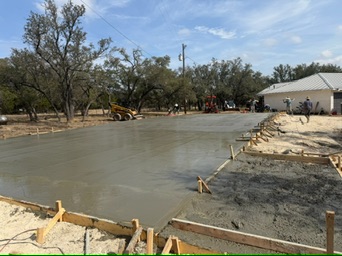
This Georgetown field note isolates the shop-slab finish phase from a larger property project that also included retaining-wall work. SLA’s source image shows fresh concrete, the building footprint held by braced forms, a troweled surface, and the slab at an early cure stage. The related master article supplies the wider job context.
Why forms still matter after the surface is finished
The photograph shows perimeter forms and bracing remaining beside the new slab. Until the concrete has reached the project’s required condition, those forms protect the edge and preserve the line established before placement. Removing or loading them is a planned step, not a visual guess.
The image does not confirm shop dimensions, thickness, steel, vapor control, concrete strength, edge design, embedded items, flatness, or cure method. Those requirements belong to the building and project documents, not a caption written from the final surface.
Coordinate the slab with retaining-wall and grade work
On a property where a shop slab and retaining wall share the construction sequence, the team should understand how building elevations, wall grade, drainage, access, and backfill relate. Each concrete element can be well finished and still create a site problem if the connecting elevations are unresolved.
A written scope should identify who supplies the plans, who establishes elevations, whether work follows engineered details, which party handles excavation and backfill, how water is managed, and when later work may approach the new slab or wall.
Follow the broader Georgetown project
The Georgetown shop foundation and retaining-wall article includes the connected slab and wall sequence. This phase note remains separate so readers can focus on finish, perimeter protection, early cure, and trade handoff.
For a similar shop proposal, compare base and grade, forms, reinforcement, vapor control where specified, concrete, finish, joints, cure, building interfaces, retaining-wall responsibilities, drainage, protection, and closeout as explicit items.