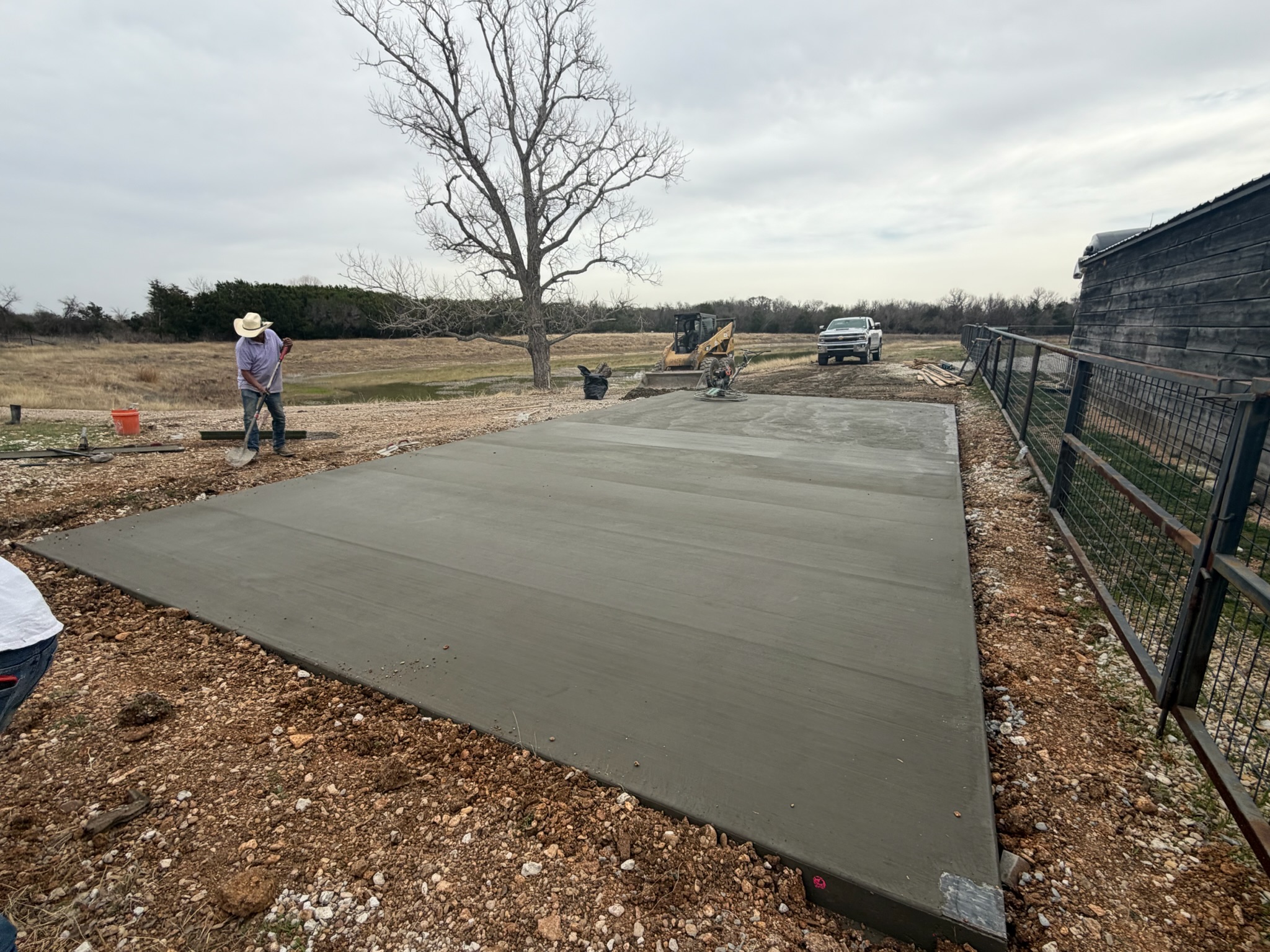
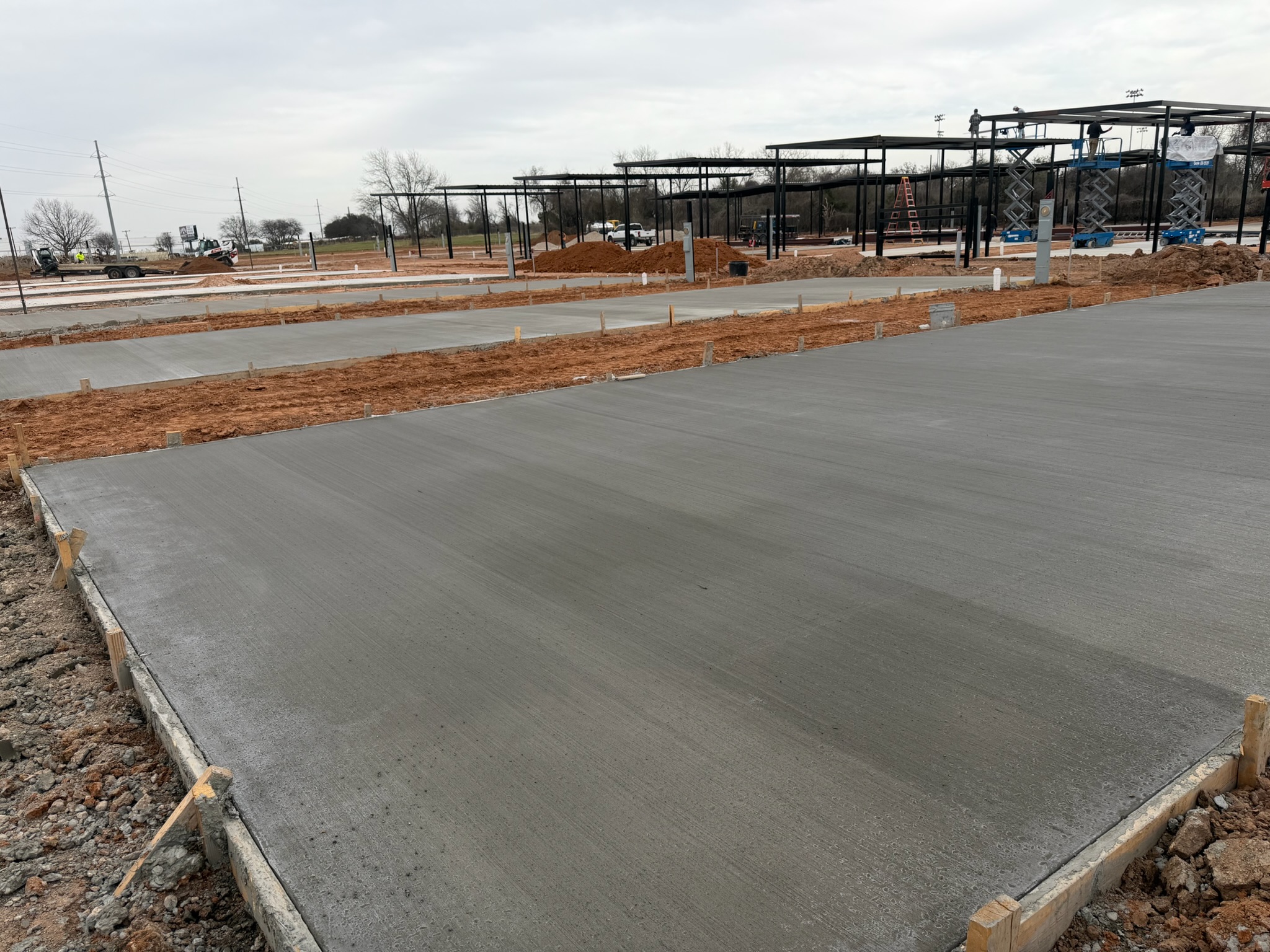
This is the completion-and-handoff phase of the Magnolia RV pad series. The source photographs show a finished troweled surface, perimeter lines, and the pad beside a fence and outbuilding. Rather than repeating the pour-day description, this page focuses on what still has to happen after the finishing equipment leaves.
A finished appearance is not the same as an open pad
The album establishes that the visible placement reached the finishing stage. It does not state the cure method, temperature and weather record, form-removal plan, opening time, final pad count, inspection, or owner acceptance. Those closeout facts should be documented separately.
Until the project’s opening criteria are met, barriers and site communication should protect the surface and edges from RVs, construction vehicles, foot traffic, stored materials, wash water, and later trades. The appropriate timing follows the concrete and project requirements, not a generic calendar promise.
A practical handoff walk around the pad
Walk the perimeter and transitions, note visible surface and edge conditions, confirm planned joints and remaining work, check that water has a defined route, and identify any area still exposed to grading or utility work. Photograph the condition before vehicles or other crews enter.
The owner and contractor should also reconcile the placed limits with the proposal, list exclusions and punch items, identify who removes forms and restores surrounding material, and provide any cure, opening, cleaning, or maintenance instructions that apply to the actual work.
Complete the Magnolia RV sequence
Review the layout and curved-curb note, the pour-day record, and the Magnolia RV master case study for the connected site story.
Those pages now separate three real user questions: how the pads fit the covered bays, how placement moved through the site, and how finished concrete is protected and handed back for use.