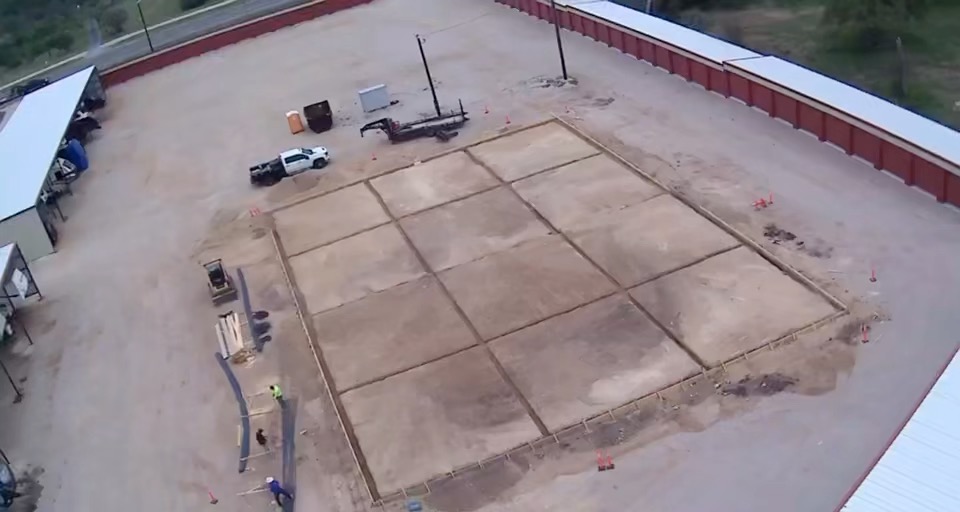
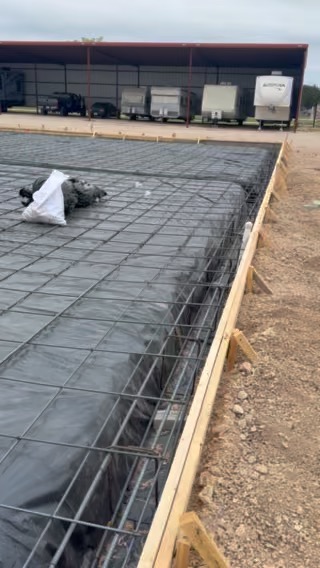
This is the pre-pour phase of the Burnet shop-slab series. SLA’s dated source record describes a 9,600-square-foot foundation, a planned 3 a.m. start, and more than 200 cubic yards on order. The drone photographs show the formed perimeter and a nine-panel layout before placement. Those are the facts this page can responsibly preserve.
Read the numbers as a delivery plan, not a finished ticket total
“More than 200 cubic yards” is the quantity named in the original pre-pour note. It describes what was reportedly on order before the pour; this page does not present it as a reconciled total from batch tickets. The final placed quantity, waste, returns, mix, and testing would need the actual delivery and project records.
The planned 3 a.m. start is also meaningful because a large slab needs delivery capacity, crew coverage, lighting, access, and a weather window before heat and site traffic increase. The source does not state why that hour was chosen, so the page explains the coordination questions without inventing Stephen’s reason.
What the aerial layout lets the team inspect
From above, the record shows a defined perimeter and nine primary slab panels or work areas across the building footprint. That view helps the team compare forms, diagonals, openings, elevations, and planned joints against the controlling documents before concrete hides the preparation.
A photograph cannot verify compaction, reinforcement, embeds, vapor control, edge sections, plumbing, tolerances, or engineering approval. A real go-or-no-go review should assign each item to a plan, inspection, test, or named person and record unresolved issues before dispatch.
A practical large-pour readiness list
Before a comparable placement, confirm approved dimensions and elevations, access for every truck, pump or chute position, batch-plant sequence, backup communication, crew roles, lights, weather monitoring, testing, washout, joints, cure materials, and protection from the next trade. The list should match the actual project rather than a generic slab recipe.
Continue with the Burnet finish and handoff note and the full Burnet case study to see how the preparation connects to the completed surface.