Fort Worth Court Slab Evaluation & Concrete-Base Planning
Decide whether an existing slab needs repair, replacement, drainage correction, or specialist testing—and organize a buildable plan for new concrete when replacement is the better path.
Existing-court projects fail when a cosmetic scope is chosen before the slab problem is understood. For Fort Worth inquiries, SLA starts the concrete conversation with movement, ponding, patches, joints, edges, drainage, access, and demolition—not with a promise that every slab can be coated.
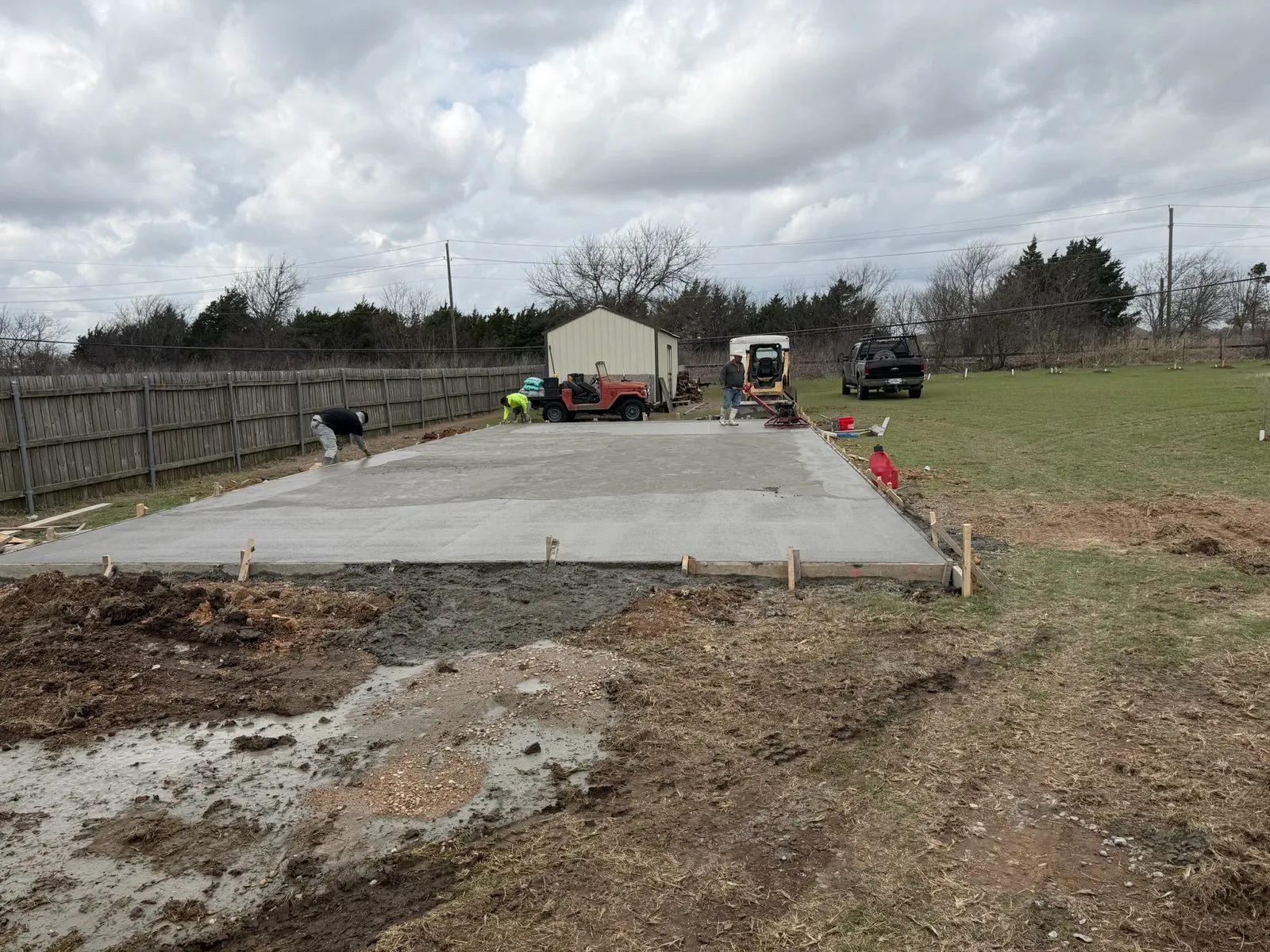
Concrete finishing near WacoSLA crew finishing a fresh concrete slab in Hewitt.
Separate the concrete condition from the finish decision
SLA evaluates potential concrete repair, replacement, or new-base work. The court-surface specialist determines whether the resulting substrate can accept its system and what preparation, testing, cure, and opening criteria apply.
Concrete-base planning and construction: SLA can evaluate and, when accepted in the proposal, quote site preparation, base, forming, reinforcement, slab placement, joints, drainage, concrete repair, or replacement.
Court-surface system and game lines: A court-surface specialist should define coating compatibility, surface preparation, texture, colors, game-line layout, cure requirements, and play-surface acceptance.
Design and supporting trades: The project team assigns surveying, engineering, permits, accessibility, fencing, lighting, electrical, net systems, equipment, shade, and other non-concrete work.
One coordinated scope sheet: Before scheduling, the proposal should identify the controlling plans, accepted concrete work, owner responsibilities, specialist handoffs, exclusions, and travel terms.
How an inquiry becomes an accepted scope
Step 1: Document the entire slab - Send wide views in both directions, then close photos of cracks, joints, patches, edges, drains, low spots, transitions, and areas where water or debris collects.
Step 2: Sort defects by likely decision - Stable isolated damage may support a repair discussion. Repeated movement, broad settlement, heaving, failed patches, weak edges, or persistent drainage problems can move the conversation toward replacement or professional evaluation.
Step 3: Get surface-system acceptance criteria - Before finalizing concrete work, the court specialist should state its requirements for crack treatment, flatness or slope, finish profile, joints, moisture, cure, and time before coating.
Step 4: Plan access, removal, drainage, and travel - The written scope identifies demolition and haul-off, site access, base and concrete work, drainage responsibility, inspections, surface handoff, mobilization, travel, and exclusions.
Match the symptom to the next investigation
Use the pattern—not a single crack—to decide who needs to look next.
Movement pattern: Record crack width changes if known, vertical displacement, rocking panels, heaving, settlement, and whether prior patches have reopened.
Water pattern: Photograph the slab after rain when safe, mark ponding and runoff, and show drains, downspouts, surrounding grade, eroded edges, and discharge paths.
Surface-system pattern: Identify existing coatings or repairs and ask the selected court specialist what testing, removal, repair, profile, moisture, and cure conditions it will accept.
Fort Worth slab-evaluation packet
A consistent photo and fact set makes repair-versus-replacement conversations more useful.
Address, approximate slab age if known, intended sport, and use level
Overall dimensions and wide photos from every side
Close photos with scale at cracks, vertical offsets, patches, joints, edges, and drains
Notes on ponding, runoff, erosion, prior repairs, and whether defects appear to change
Access route, demolition path, staging area, overhead limits, and areas that must remain open
Existing coating information and the selected specialist’s acceptance requirements
Known permit, inspection, accessibility, right-of-way, or facility approvals
Fort Worth, TX project-planning considerations
Photos show symptoms, not hidden support: A remote review can identify questions and obvious defects. It cannot verify subsurface support, active movement, moisture, or coating compatibility without the field review or testing appropriate to the decision.
Drainage can control the repair decision: Map where water enters, crosses, ponds beside, and leaves the slab. A repair plan that ignores the surrounding water path can leave the same stress in place.
Right-of-way impacts are a separate workstream: If access or construction affects sidewalks, curb ramps, drive approaches, curb and gutter, alleys, or temporary lane use, the owner or design team should check Fort Worth’s current requirements before scheduling.
How Fort Worth project review works
Start remotely with an address, marked dimensions, a full photo set, defect history if known, access, drainage behavior, intended sport, target timing, and any surface-system documents.
SLA is based in Waco, so a Fort Worth visit or concrete proposal is confirmed case by case after the information shows what field decision is needed and whether the concrete scope supports travel.
Repair, replace, or build new?
This is a screening tool, not a remote diagnosis. It helps send the project to the right next step before money is committed to cosmetic work.
Repair conversation: isolated damage, limited movement indicators, workable drainage, and a surface specialist willing to evaluate the repaired substrate.
Replacement conversation: widespread displacement, recurring failed patches, extensive edge failure, base loss, or geometry that cannot support the intended layout.
Drainage-first conversation: standing water, runoff crossing the slab, erosion at edges, or surrounding grades that keep reintroducing moisture and support problems.
Specialist-testing conversation: concrete appears stable but coating compatibility, moisture, profile, crack treatment, or existing product layers remain uncertain.
New-base conversation: the site and layout are changing enough that grade, drainage, access, base, and the complete slab package should be planned together.
Pattern, color, border, drainage, and sealing ideas for decorative patios.
Fort Worth, TX sports-court FAQs
Can photos determine whether my Fort Worth slab should be repaired or replaced?
Photos can organize the first review and reveal visible patterns, but they do not prove subsurface support, active movement, moisture, or coating compatibility. The next step may be an SLA site review, court-specialist testing, engineering input, or a written repair or replacement scope depending on the symptoms.
Should I hire the coating specialist before repairing the slab?
It is useful to identify the specialist and its substrate requirements before finalizing repairs. That lets the concrete scope address the defects it can reasonably correct while the specialist retains responsibility for accepting the substrate and installing the surface system.
Can SLA include coating and game-line striping in the concrete estimate?
Do not assume those items are included. SLA prices the accepted concrete scope. Coating, game-line layout, and play-surface approval should be assigned to a named court-surface specialist unless a written proposal explicitly states otherwise.
What is the fastest way to get a useful estimate review?
Send the address, intended sport, approximate dimensions, site or slab photos, access information, drainage concerns, target timing, and any plans or surface-system requirements. That is enough to identify the next missing decision without pretending photos are a final site assessment.